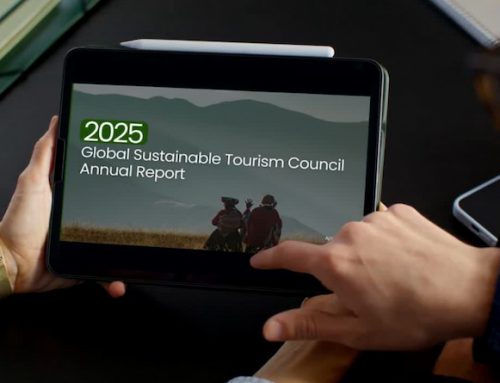


 In December 2025, GSTC announced the completion of the revision of its Industry Standard for Hotels and Tour Operators. As part of this revision, the former GSTC Industry Standard version 3.0 has evolved into two distinct standards: the GSTC Hotel Standard version 4.0 and the GSTC Tour Operator Standard version 4.0.
To support a smooth and consistent transition to the revised standards, GSTC has now published the Transition Planning Guidance for the GSTC Hotel and Tour Operator Standards. The Transition Guidelines provide practical and technical guidance for all interested parties involved in certification and accreditation, including certification bodies, accreditation bodies, GSTC-Recognized Standard Owners, and tourism enterprises.
The guidance outlines key elements of the transition process, including:
- The three-year transition period and applicable timelines;
- The validity of certifications issued under the previous version of the standard;
- Recommended approaches for transition audits, including during surveillance or recertification; and
- Responsibilities and expectations for Certification Bodies, Accreditation Bodies, and Recognized Standard Owners.
–
The Transition Guidelines are intended to support a clear, transparent, and orderly shift to the revised standards, while allowing sufficient time for stakeholders to review, plan, and adjust their internal processes, procedures, and documentation in line with the updated requirements.
GSTC will continue to engage with its partners and stakeholders throughout the transition period and will provide further clarification and support where needed to ensure consistent and credible implementation of the revised standards.
About the GSTC Standards
The GSTC Standards were established to provide a global understanding of “sustainable tourism” and serve as the minimum standards that any tourism business should strive to achieve. They are organized around four main pillars: effective sustainability planning, maximizing social and economic benefits for the local community, enhancing cultural heritage, and reducing negative impacts on the environment. They have applicability to the entire tourism industry.
The GSTC Standards (known previously as GSTC Criteria) are developed based on the GSTC Standard Setting Manual v3.0, where the ISEAL Code of Good Practice for Sustainability Systems is used as a reference. The ISEAL Alliance is the body recognized to provide guidance on international norms for developing sustainability standards in all sectors.
There are now a total of five published GSTC Standards:
- GSTC Destination Standard for public policy-makers and destination managers.
- GSTC Hotel Standard applies to hotels and other types of accommodations, regardless of their size and location.
- GSTC Tour Operator Standard for tour operators of all types and sizes.
- GSTC MICE Standard for Venues, Event Organizers, and Events & Exhibitions.
- GSTC Attraction Standard for tourist attractions such as theme parks, museums, or natural and cultural parks.
Some of the uses of the standards include the following:
- Serve as the basis for certification for sustainability.
- Serve as basic guidelines for businesses of all sizes to become more sustainable, and help businesses choose sustainable tourism programs that fulfill these global standards.
- Provide greater market access in the growing market for sustainable products, serving as guidance both for travelers and for travel agencies in choosing suppliers and sustainable tourism programmes.
- Help consumers identify sound sustainable tourism programs and businesses.
- Serve as a common denominator for information media to recognize sustainable tourism providers.
- Help certification and other voluntary programs ensure that their standards meet a broadly-accepted baseline.
- Offer governmental, non-governmental, and private sector programs a starting point for developing sustainable tourism requirements.
- Serve as basic guidelines for education and training bodies, such as hotel schools and universities.
- Demonstrate leadership that inspires others to act.